Spice Oleoresins • B2B Guide
If you work with food flavours, seasonings, namkeen, snacks or other food products, you have probably come across the term spice oleoresin.
But what exactly is a spice oleoresin? How is it different from an essential oil? And more importantly, how do you decide which one is right for your product?
These are common questions we hear from businesses looking for concentrated spice profiles for commercial applications. So rather than making this another technical definition, let’s look at spice oleoresins from a practical buyer’s point of view.
Looking for a Spice Oleoresin?
Tell us your product, required flavour and approximate quantity. Our team can help you discuss the right option and sampling.
What Is a Spice Oleoresin?
In simple terms, a spice oleoresin is a concentrated extract obtained from a spice. It is designed to capture important flavour and aroma characteristics of the original spice in a concentrated form.
Think about the difference between handling a large quantity of a raw spice and working with a concentrated extract. For a manufacturer, the concentrated format can be much easier to work with when developing a consistent flavour system.
The exact composition of an oleoresin depends on the source spice and extraction process. This is why it is important to look at the specification of the actual product rather than assuming every oleoresin behaves in the same way.
Spice Oleoresin vs Essential Oil — Are They the Same?
Not exactly.
This is one area where product names can sometimes create confusion. Essential oils are primarily made up of volatile aromatic compounds, while spice oleoresins can contain both volatile and non-volatile components of the spice.
That difference can matter when you are developing a food or flavour application.
| Spice Oleoresin | Essential Oil |
|---|---|
| Concentrated spice extract | Concentrated volatile aromatic fraction |
| Can contribute flavour and aroma | Primarily associated with aroma |
| Commonly considered in food flavour applications | Used across fragrance, aromatherapy and other applications depending on the oil |
| Composition depends on spice and extraction | Composition depends on botanical source and extraction method |
So if a customer tells you they need “pepper oil” or “cinnamon oil”, it is worth clarifying exactly what type of ingredient they need before placing the order.
Why Are Food Manufacturers Interested in Spice Oleoresins?
The answer is fairly practical: manufacturers want flavour consistency without having to handle large quantities of raw spices in every production process.
A concentrated spice extract can make formulation and handling more convenient. It can also give an R&D team a more controlled way of adjusting the flavour profile of a product.
But there is no universal “best” oleoresin. The right choice depends on what you are making.
A namkeen manufacturer may be looking for a very different spice profile from a beverage or sauce manufacturer.
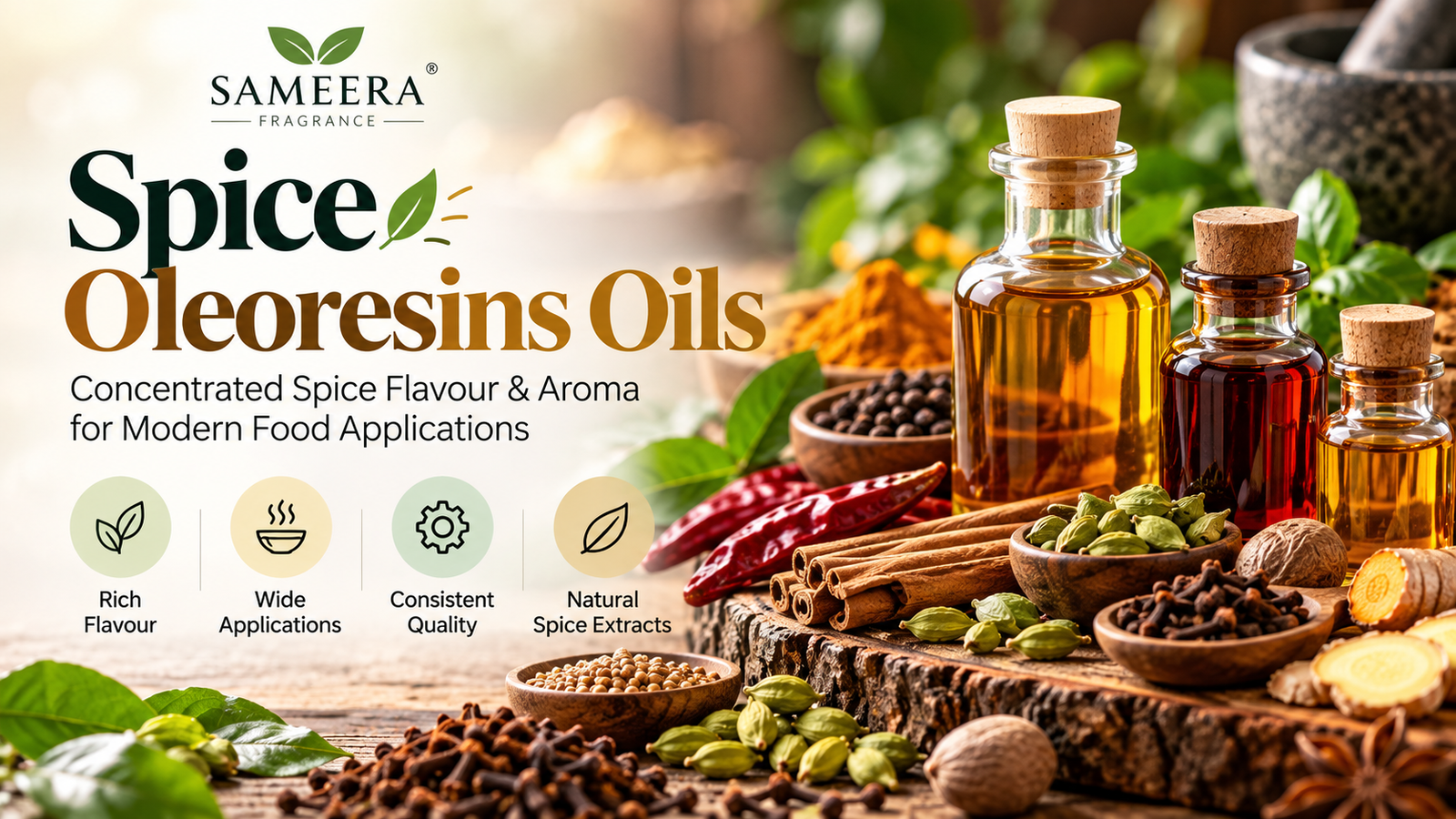
Top 10 Spice Oleoresins Oils to Explore
Here are ten spice profiles that are worth considering if you are developing food, seasoning or flavour products.
1. Ajwain / Ajowan Oleoresin
Ajwain has a very recognisable warm and spicy character. It is particularly interesting for Indian-style savoury applications where that familiar ajwain note is important.
Common application direction: Namkeen, savoury snacks, spice blends and seasoning products.
2. Black Pepper Oleoresin
Black pepper brings the sharp, warm and pungent character most people immediately associate with pepper. It is a natural fit for savoury products and seasoning systems.
Common application direction: Seasonings, sauces, savoury foods and snack products.
3. Cardamom Oleoresin
Cardamom has a distinctive aromatic character that works beautifully in both traditional and modern flavour profiles.
Common application direction: Beverages, sweets, bakery and confectionery.
4. Cinnamon Oleoresin
Cinnamon brings warmth and sweetness with its familiar spicy character. It is one of those flavours that can immediately change the personality of a formulation.
Common application direction: Bakery, confectionery, beverages and spice blends.
5. Clove Oleoresin
Clove is strong, warm and unmistakable. Because of its pronounced character, formulation testing becomes particularly important when deciding the level required in a finished product.
Common application direction: Spice blends, savoury products and selected flavour applications.
6. Cumin Oleoresin
If you work in Indian food products, cumin needs little introduction. Its warm, earthy and savoury profile is widely associated with snacks, seasoning and traditional food products.
Common application direction: Namkeen, snacks, sauces and savoury seasoning.
7. Ginger Oleoresin
Ginger gives a warm and slightly pungent character. It can be useful when a product needs a noticeable ginger profile without relying entirely on raw ginger material.
Common application direction: Beverages, sauces, confectionery and food flavour formulations.
8. Nutmeg (Jaiphal) Oleoresin
Nutmeg has a warm, sweet and slightly woody spice character. Sameera Fragrance currently lists Nutmeg (Jaiphal) Spice Oleoresins Oil under its Spice Oleoresins Oils category. The product page identifies the botanical name as Myristica fragrans Houtt. and lists bulk packaging options.
Common application direction: Spice blends, food flavour applications and products requiring a traditional nutmeg profile.
9. Turmeric Oleoresin
Turmeric is known for its earthy and characteristic spice profile. For food manufacturers, it can be considered when a concentrated turmeric character is required.
Common application direction: Seasonings, savoury foods and spice formulations.
10. Vanilla Oleoresin
Vanilla is one of the most familiar flavour profiles in the food industry. It brings a sweet, rich and comforting character to many products.
Sameera Fragrance lists Vanilla Oleoresin Oil under Spice Oleoresins Oils, with Vanilla planifolia listed as the botanical name.
Common application direction: Bakery, confectionery, desserts, beverages and flavour formulations.
Which Spice Oleoresin Is Right for Your Product?
This is probably the most important question in the whole article.
Don’t start with the question, “Which oleoresin is strongest?”
Start with:
What flavour do I want my customer to experience?
Then look at the application.
For example, if you manufacture namkeen, you may be looking at cumin, ajwain, black pepper or other savoury spice profiles. If you manufacture bakery products, vanilla or cinnamon may be more relevant.
The actual formulation, processing method and desired flavour intensity will determine the most suitable ingredient.
What Should You Ask Before Buying Spice Oleoresins in Bulk?
If you’re buying for commercial production, don’t make the decision from a price list alone.
Before placing an order, ask your supplier:
- What exactly is the product?
- What is the botanical source?
- What extraction method is used?
- What specifications are available?
- Can I get a sample?
- What documentation is available?
- What packaging sizes are available?
- What is the MOQ?
- What is the expected lead time?
- Can the supplier support repeat orders?
These questions may take a few extra minutes before the first order, but they can save a lot of time when you move into regular production.
Need a Sample Before You Buy in Bulk?
Send us your product name, required spice profile and approximate quantity on WhatsApp.
Why Sample Testing Matters
Here’s something every B2B buyer should remember: the ingredient that smells good on a sample strip is not automatically the ingredient that will work perfectly in your finished product.
Your formulation team should test the material in the actual product.
Look at the flavour, aroma, stability and overall performance after processing. This is particularly important when the ingredient will be used at commercial scale.
Sampling is not just a formality. It is part of making a sensible purchasing decision.
Spice Oleoresins for Namkeen, Snacks & Seasonings
Indian snack manufacturers often need a flavour profile that is recognisable but also consistent from batch to batch.
This is where concentrated spice ingredients can become useful during product development.
Depending on the recipe, manufacturers may explore profiles such as ajwain, cumin, black pepper, ginger, turmeric and other spices.
The important thing is to match the ingredient to the final seasoning system and test it properly before commercial production.
Spice Oleoresins for Food & Flavour Manufacturers
For a B2B buyer, the conversation should ideally go beyond “What is your price per kilogram?”
A better conversation is:
“This is what we manufacture. This is the flavour we need. This is our approximate quantity. Can you recommend a suitable product and provide a sample?”
That gives the supplier much more information and makes it easier to discuss the right product for your application.
Frequently Asked Questions
What are spice oleoresins used for?
Spice oleoresins are concentrated spice extracts used to provide characteristic flavour and aroma in suitable formulations. They can be considered for seasonings, savoury foods, snacks, beverages, bakery, confectionery and other food applications depending on the specific ingredient.
Are spice oleoresins and essential oils the same?
No. Their composition and extraction characteristics can differ. Oleoresins can contain both volatile and non-volatile components, while essential oils are primarily volatile aromatic fractions.
Which spice oleoresin is suitable for namkeen?
It depends on the flavour profile of the namkeen. Ajwain, cumin, black pepper and other spice profiles may be considered depending on the recipe. A sample should be tested in the actual seasoning or finished product before bulk production.
Can I buy spice oleoresins in bulk?
Yes. Bulk requirements can be discussed based on the product, application, packaging and quantity required. Contact Sameera Fragrance with your requirement to discuss available options.
Should I request a sample before placing a bulk order?
Yes. For commercial applications, sampling and formulation testing are sensible steps before committing to a larger purchase.
How do I choose a spice oleoresin supplier?
Look at product identity, documentation, sample quality, consistency, packaging, MOQ, communication and repeat-supply capability. Price is important, but it should not be the only factor.
Looking for Spice Oleoresins for Your Business?
Tell us what you’re manufacturing and which spice flavour you’re looking for. Whether you need a sample for R&D or are planning a bulk requirement, start the conversation with our team.
WhatsApp: +91 95698 86979